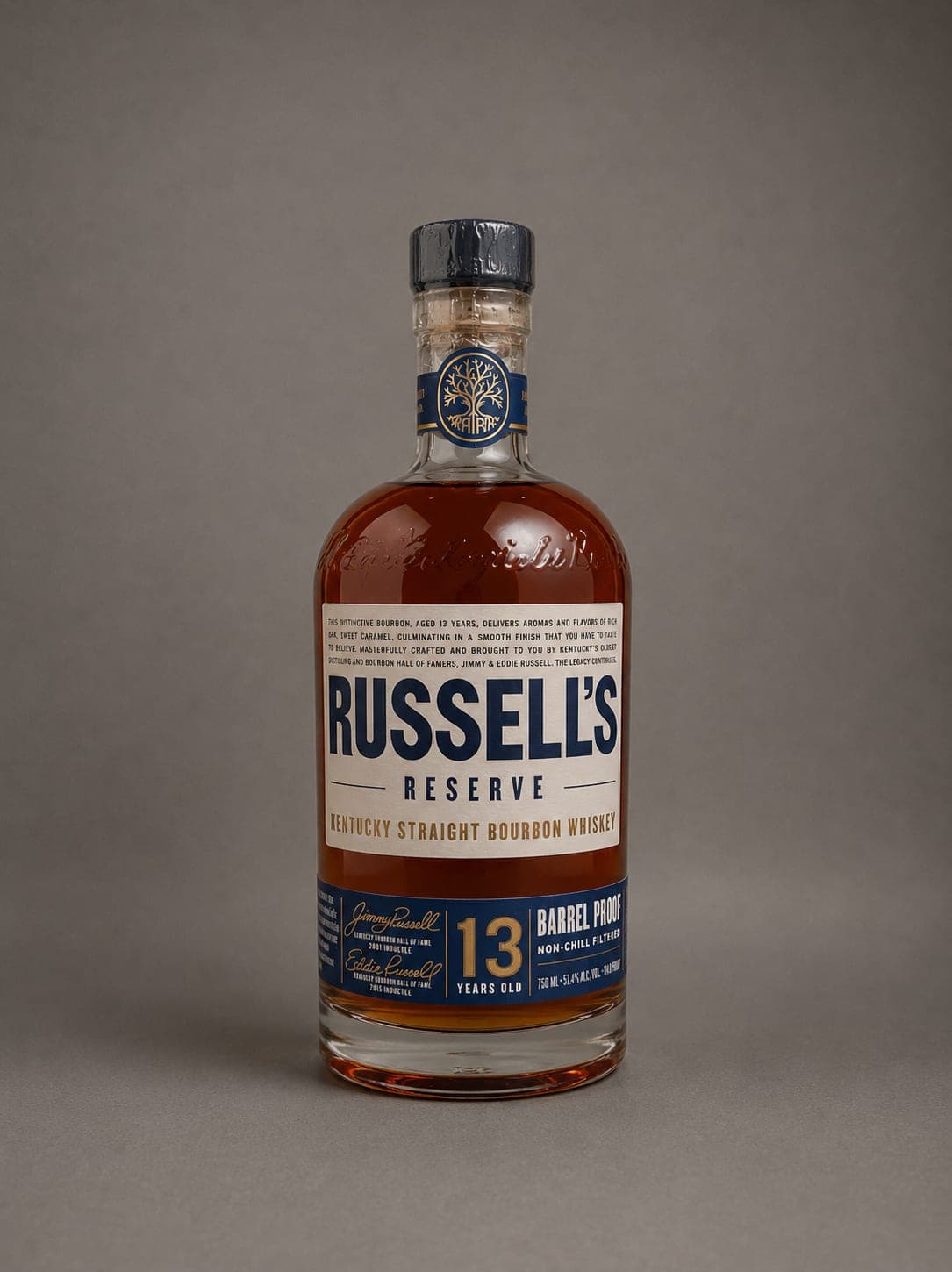
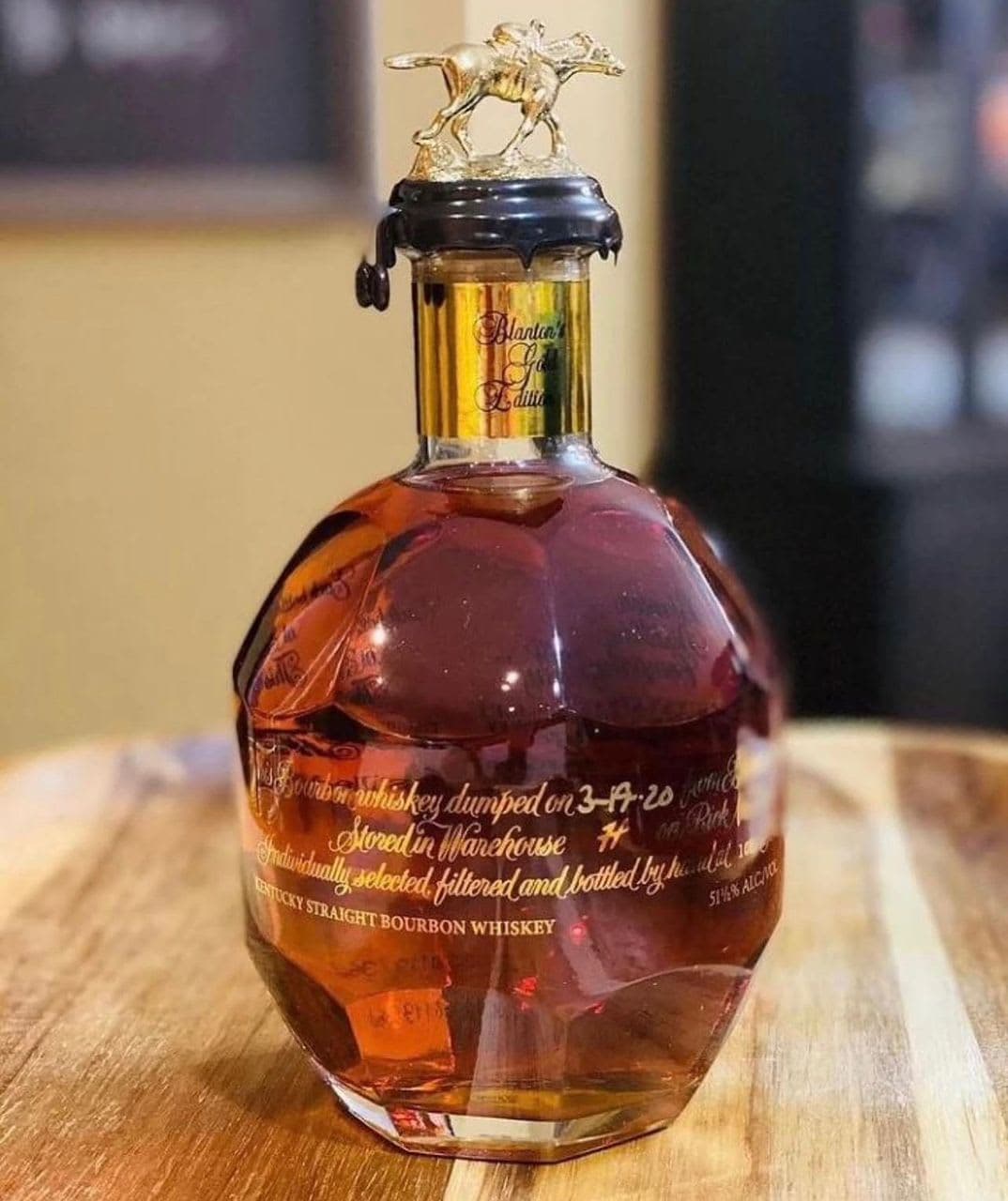
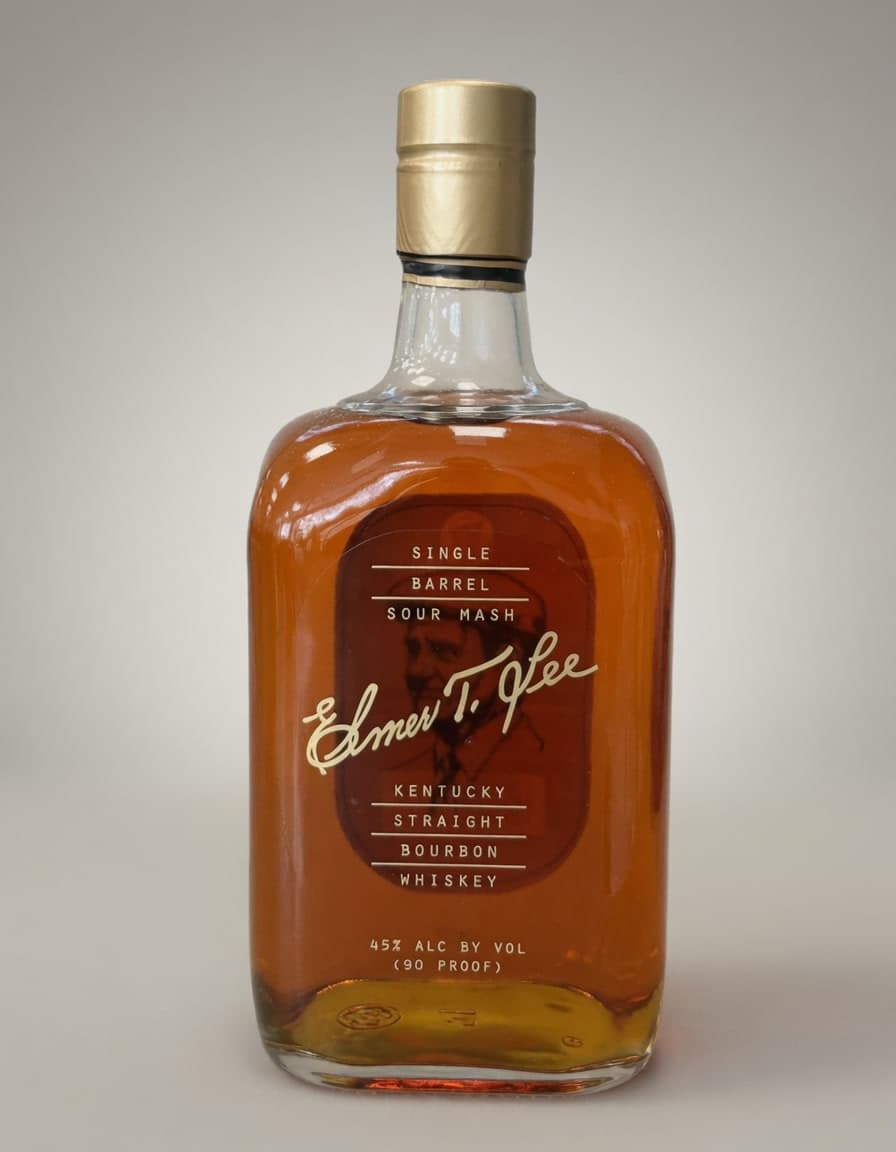
Is Rock Hill Farms a wheated bourbon like Weller?
No. Rock Hill Farms is 81% corn, 8% rye and 11% malted barley, one of Buffalo Trace's rye-recipe bourbons, with no wheat in it at all. That rye is what you read as dry spice through the finish, where a wheated bourbon such as Weller fades sweet instead. Same distillery, different recipe family.
How is Rock Hill Farms different from Blanton's?
They share the same Buffalo Trace rye recipe and both are bottled from single casks, so strength and selection separate them rather than recipe. Rock Hill Farms goes out at 100 proof, 50% ABV, against Blanton's Original at 93 proof, which gives it a fuller body and more pull from the oak. The presentation differs too: a heavy crystal decanter with a silver foil capsule.
How does Rock Hill Farms compare with Elmer T. Lee?
Both are single barrels off the same Buffalo Trace rye recipe, and the gap is proof and price. Elmer T. Lee is 90 proof, 45% ABV, listed at nine years and $80; Rock Hill Farms is 100 proof, 50% ABV, around eight years and $100. The extra ten proof points give Rock Hill Farms more weight and oak grip for the same spicy, caramel-led profile.
How old is Rock Hill Farms?
Around eight years: that is the figure our listing carries, and the bottle itself states no age. Buffalo Trace does not publish an age for it, so treat eight years as the working number rather than something printed on the label. At that maturity and 100 proof the oak is present without running the show.
What does Rock Hill Farms taste like?
Rich and rounded, with a thread of rye spice sitting behind the sweetness. The nose gives caramel, vanilla custard, almond, baked apple and soft oak; the palate is toffee, brown sugar and butterscotch with a hint of cherry; the finish is long and warming on vanilla and toasted oak. The 100 proof is a set bottling strength, not cask strength, so it carries weight without burn.
Why is Rock Hill Farms hard to find at retail?
Because it is filled one cask at a time and allocated through distributors, so a shop usually receives a few bottles rather than cases. Single-barrel output cannot be scaled up to meet demand the way a batched bourbon can, since there is only ever one barrel in the dump. We list it at $100 a bottle, sold singly, with no case price.
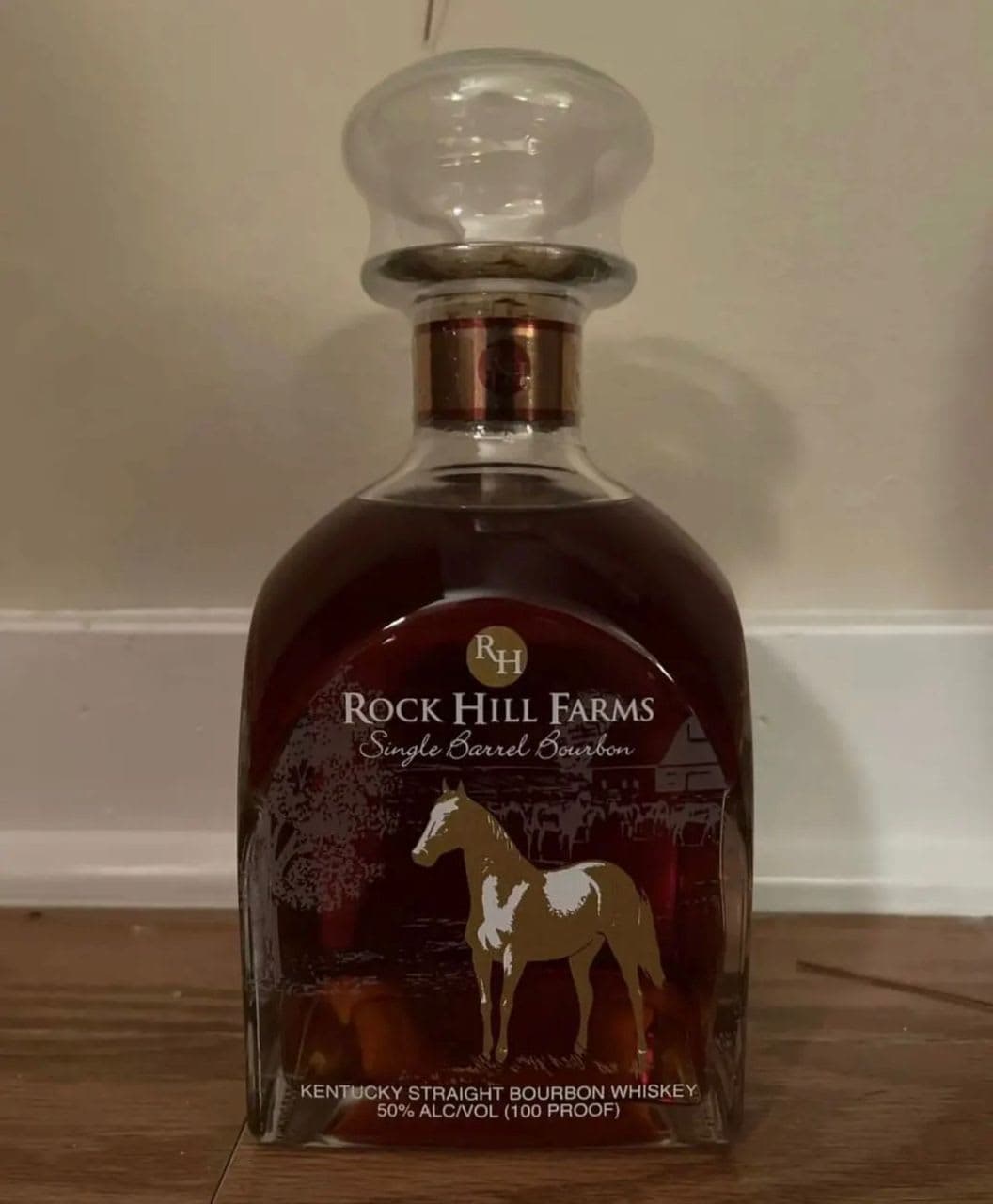 Single BarrelAllocated