Fundamentals
Bottled in Bond: The Strictest Label in American Whiskey
An 1897 consumer-protection law, four hard requirements, and the reason a green strip on a neck still means something in 2026.
Eleanor Hayes
Master Distiller, Bourbon & Oak

In the 1890s a bottle labelled whiskey might contain whiskey. It might equally contain neutral spirit coloured with iodine, flavoured with prune juice, and sharpened with anything from tobacco to sulphuric acid. There was no federal food and drug law to stop it — the FDA would not exist for another decade — and buyers had no way to tell an honest bottle from a dangerous one.
The Bottled-in-Bond Act of 1897 was the answer, and it is one of the first consumer protection laws the United States ever passed for any product. It did not ban adulteration. It did something cleverer: it created a voluntary standard so strict that meeting it was itself a guarantee, and put the federal government's name behind the label.
The Four Requirements
To print bottled in bond, a whiskey must satisfy all four. There are no partial credits.
- The product of one distillation season — a single January-to-June or July-to-December run. No blending across years to smooth out a bad batch.
- The product of one distillery, by one distiller. No buying in whiskey from elsewhere and mixing it.
- Aged at least four years in a federally supervised bonded warehouse.
- Bottled at exactly 100 proof. Not around 100. Exactly.
The label must also identify the distillery where it was made, and where different, where it was bottled. That requirement is the ancestor of the DSP number you can still read on a modern bottle, which we cover in how to read a bourbon label.
What Bonded Actually Meant
The bond in the name is a tax term, not a marketing one. Whiskey sat in a government-supervised warehouse under federal lock, with the excise tax deferred until it was bottled and removed. A Treasury official held the key. That supervision is what made the guarantee credible: the government was not taking the distiller's word for the age, it was watching the barrels.
The green strip stamp that used to run over the cap was the visible proof, and for decades it was how ordinary buyers identified a bottle they could trust. The strip stamps ended in 1985; the standard did not.
Why 100 Proof Matters
The fixed strength looks arbitrary and is not. Proof was the easiest thing in the whole chain to cheat: watering a barrel down was cheap, invisible and profitable. Fixing the figure at exactly 100 removed the temptation and gave inspectors a single number to test against.
It also happens to be an excellent drinking strength. At 100 proof a bourbon has enough body to survive an ice cube and enough restraint to drink neat without water — which is why bonded bottles make unusually reliable house pours. The tasting guide covers where dilution starts to matter.
The Man on the Bottle
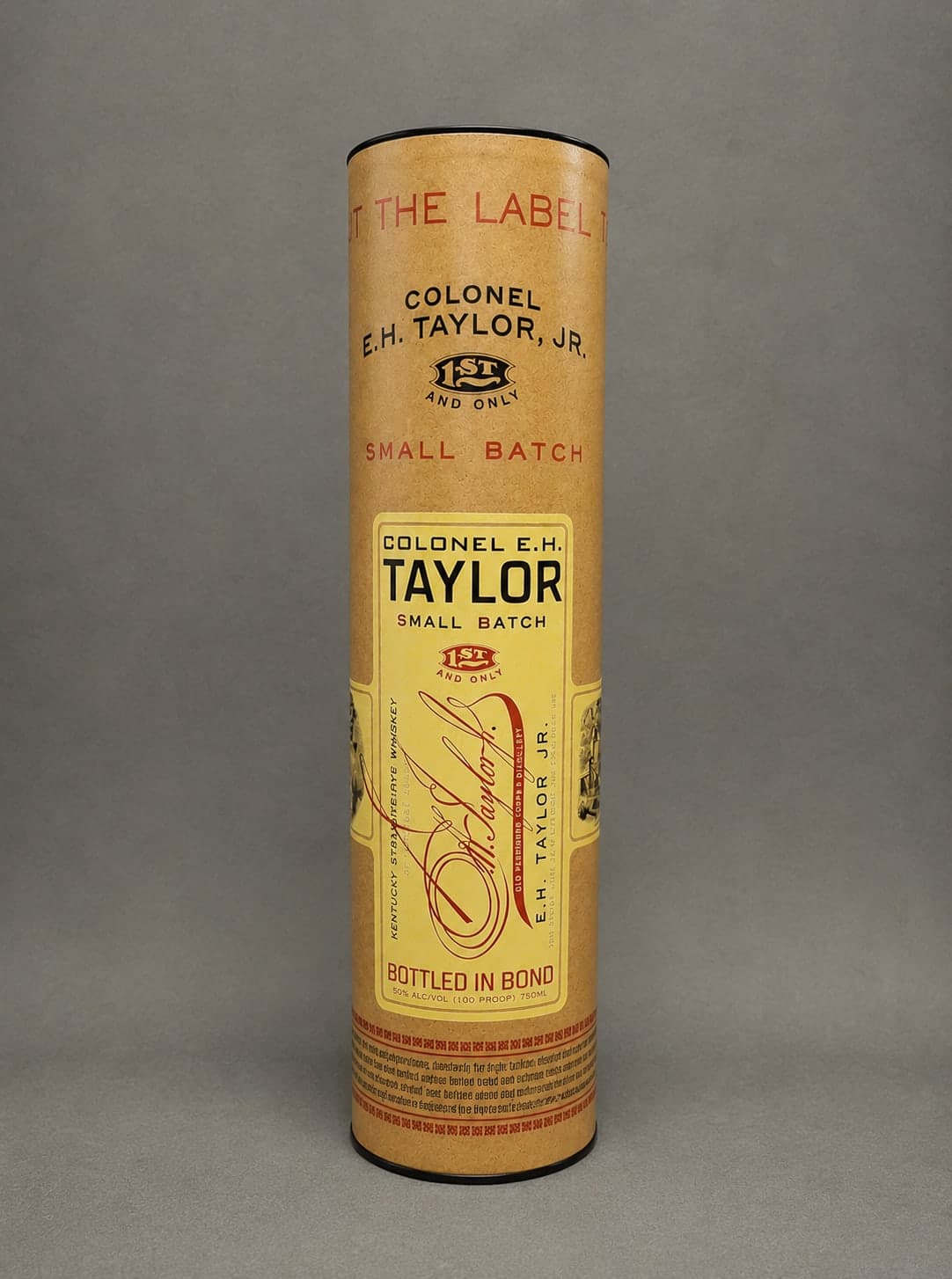
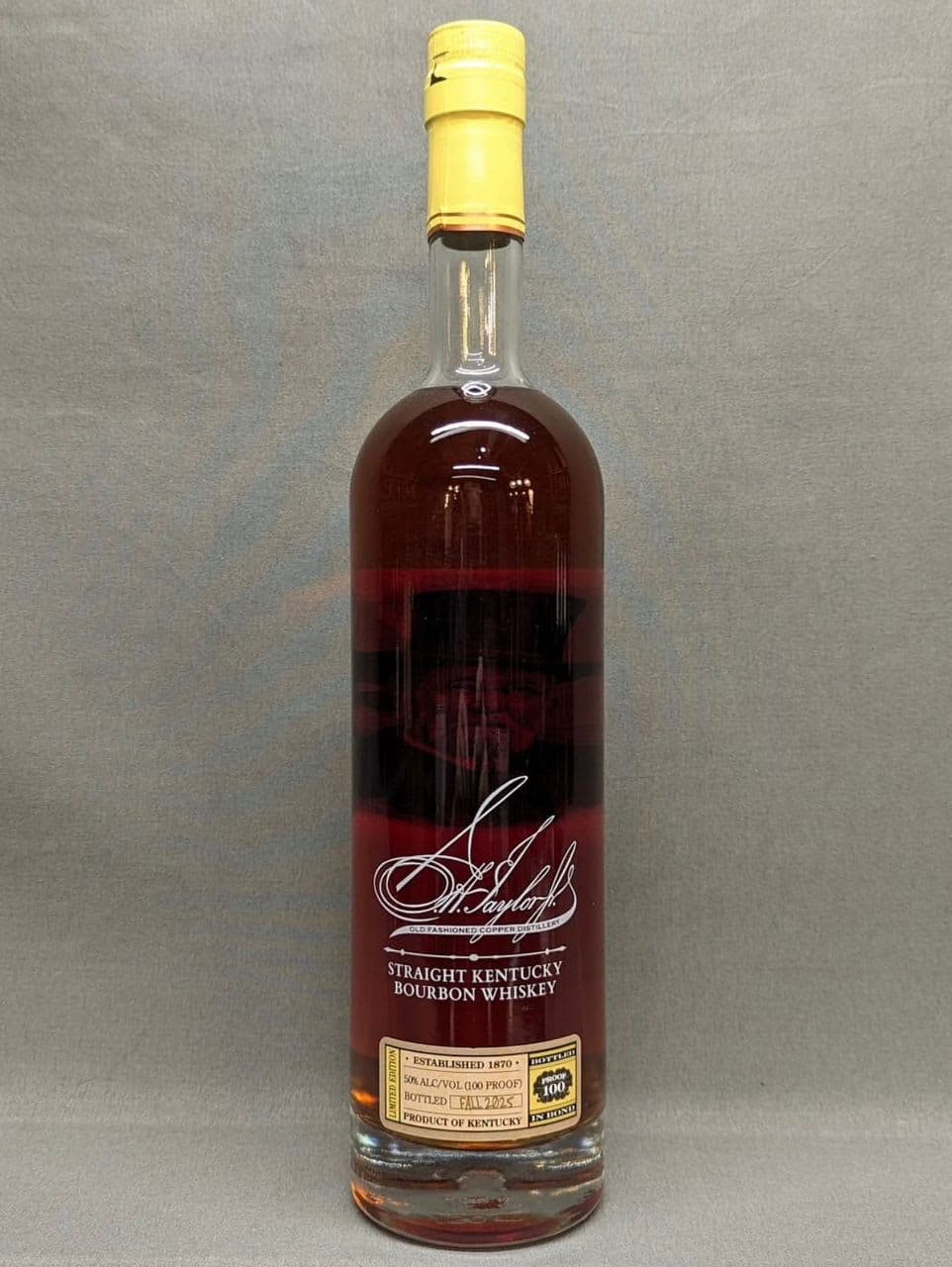
Colonel Edmund Haynes Taylor Jr. campaigned for the Act, and the range that carries his name is built on the standard he fought for. E.H. Taylor Small Batch is bonded at 100 proof, and E.H. Taylor Single Barrel applies the same standard to one cask at a time.
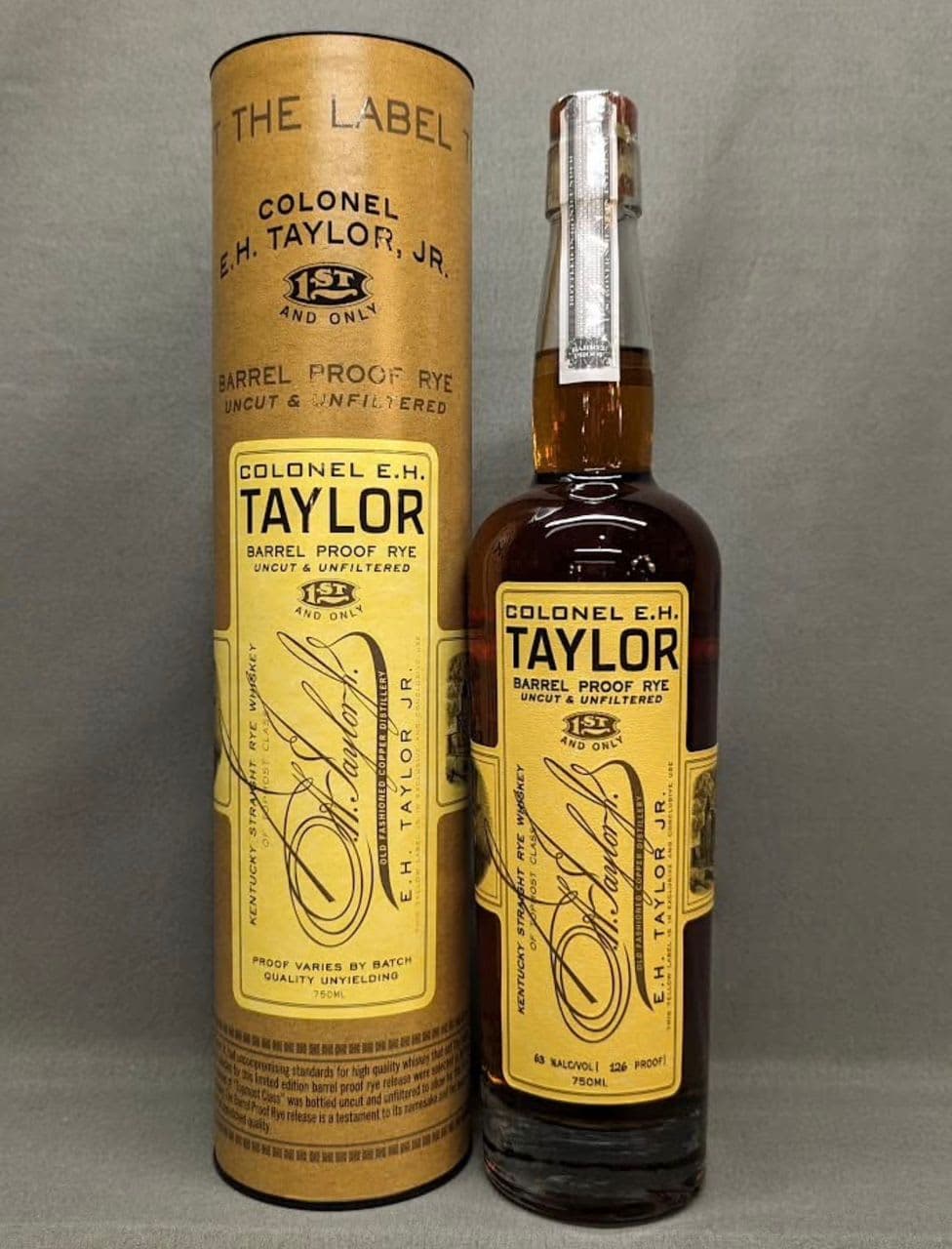
E.H. Taylor Barrel Proof breaks the rule deliberately, arriving uncut at 131 proof rather than the mandated 100 — which is worth understanding rather than assuming it is an upgrade. It is a different proposition from the bonded expressions, not a stronger version of the same guarantee.
Is It Still Worth Looking For?
Yes, for one specific reason: it is the only claim on an American whiskey shelf that cannot be gamed. Small batch means nothing. Reserve means nothing. Handcrafted means nothing. Bottled in bond means four verifiable things, and a producer who prints it without meeting them is committing fraud rather than exaggerating.
In a market where a brand can be invented in an afternoon and a story written to match, that matters. It will not tell you a bottle is delicious — for that, work out whether you prefer wheat or rye as the second grain. But it tells you the bottle is honest, and at this end of the shelf that is not nothing.
The bonded expressions we stock sit in the shop alongside the rest of the Taylor range, and the ranked guide puts them in context against the allocated bottles.
Tagged
Common Questions
Frequently Asked
- What does bottled in bond mean?
- One distillation season, one distillery, one distiller, at least four years in a federally supervised warehouse, and bottled at exactly 100 proof. All four are required — there are no partial qualifications.
- Why is bonded whiskey always 100 proof?
- Proof was the easiest thing to cheat — watering a barrel down was cheap and invisible. Fixing the figure at exactly 100 removed the temptation and gave inspectors one number to test against. It also happens to be an excellent drinking strength.
- Is bottled in bond better than straight bourbon?
- It is a stricter guarantee. Straight bourbon requires two years and allows blending across distilleries and seasons; bonded requires four years from a single season at a single distillery. Stricter is not automatically tastier, but it is more honest.
- What was the Bottled-in-Bond Act of 1897?
- One of the first US consumer protection laws, passed when adulterated whiskey was a genuine public health problem and decades before the FDA existed. It created a voluntary standard strict enough that meeting it was itself a guarantee.
- Does bottled in bond mean the whiskey is only four years old?
- No. Four years is the minimum. Plenty of bonded whiskey is considerably older — the label simply stops describing age past that floor.